
Is your body ready for baby? These are the tests every person should consider before conceiving.
Over the years in clinical practice, I’ve seen the same scenario unfold time and time again. A client comes to me after trying to conceive for 3 to 6 months without success. Some have sadly experienced miscarriage during this time. They've been told by their doctor that all their pathology markers are "within the normal range"—yet something still isn’t quite right.
“Preconception care refers to healthcare interventions and services provided to individuals or couples before pregnancy to optimise their health and promote favourable outcomes for both the mother and the baby.” 1 As a nutritionist, preconception is a vital window to support and optimise. It’s the perfect time to identify and address nutrient deficiencies, correct hormonal imbalances, and ensure each plate is nourishing the body with what it truly needs. This process can take anywhere from 3 to 6 months, sometimes longer to fine-tune nutrient levels and establish sustainable habits. When these foundations are in place before trying to conceive, research shows improved chances of conception, smoother pregnancies, and better postpartum recovery for both mum and baby2.
Egg and sperm quality are essential for a successful pregnancy. Nutritionist such as myself try optimise this outcome by giving a 3 to 6 month window for nourishment prior to trying to conceive. For formation of the egg and sperm it can take around 120 days to fully mature from the primordial state to pre-ovulation3 and the person’s health in that time is key for the health of that future embryo to baby.
In 2023, the World Health Organisation reported 1 in 6 people worldwide have infertility issues which totalled to 17.5% of the world’s population.4 There is increasing recognition in healthcare that investing time and attention into preconception care is becoming essential for the long-term health and well-being of future generations.
When discussing conception with your doctor, some of the tests I’ve listed below may be covered under Medicare. In this article, I’ll guide you on additional tests to request, ensuring you address all aspects of your fertility health. I’ve also explained the importance of each test in relation to fertility.
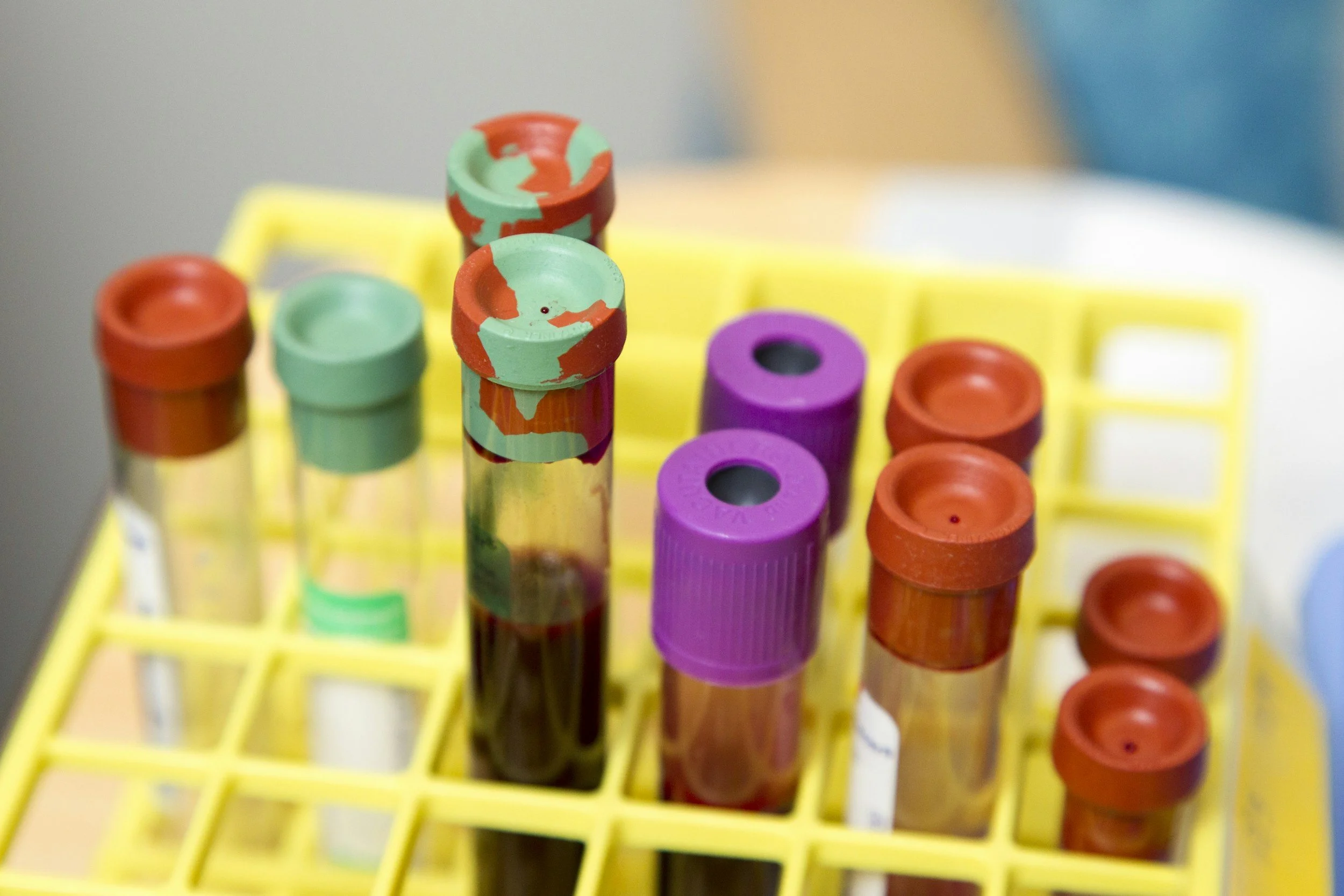
Pathology Testing prior to conceiving:
FBC/ESR - full blood count and inflammation markers
Full thyroid panel including TSH, T4, T3, rT3, TRaB, TPOAb - this is not just TSH, which most Doctors will only look at. There is plenty of research now to indicate that TSH levels are not always a good indicator of overall thyroid health.
Thyroid function is crucial for maintaining regular menstrual cycles and overall hormonal balance.
TSH (Thyroid-Stimulating Hormone) measures the overall function of the thyroid gland. Abnormal TSH can signal hypothyroidism or hyperthyroidism, both of which can impair fertility.
T4 & T3 (Thyroxine & Triiodothyronine) are thyroid hormones directly related to metabolism and ovulatory function. Low levels can cause irregular cycles and an-ovulation (lack of ovulation).
rT3 (Reverse T3) is an inactive form of T3 and can indicate an underactive thyroid or issues with the body's ability to use thyroid hormones effectively.
TRaB (Thyroid Receptor Antibodies) can indicate autoimmune thyroid disease, which can affect both fertility and early pregnancy.
TPOAb (Thyroid Peroxidase Antibodies) is a marker of autoimmune thyroid disease like Hashimoto’s thyroiditis, which can affect fertility by disrupting ovulation and increasing the risk of miscarriage.
LFT (liver function tests) - LFTs assess liver health, which is essential for detoxifying the body and processing hormones. Poor liver function can disrupt oestrogen metabolism, leading to hormone imbalances that affect ovulation and pregnancy.
Iron studies - Iron is necessary for healthy blood production and oxygen transport. Iron deficiency anemia can lead to fatigue, reduced energy levels, and difficulty carrying a pregnancy to term. It’s especially important to check before pregnancy to ensure iron stores are optimal for both conception and pregnancy.
MTHFR gene - This gene plays a crucial role in folate metabolism. Certain mutations (like C677T or A1298C) can impair the conversion of folate into its active form, which is essential for DNA synthesis and cellular function. This mutation can contribute to recurrent miscarriages, neural tube defects, and poor embryo quality. Women with MTHFR mutations may require methylated folate supplementation.
Vitamin D - Vitamin D is essential for proper immune system function and hormonal regulation. Low levels are associated with poor fertility outcomes, including lower pregnancy rates and increased risk of miscarriage. It also helps regulate the menstrual cycle and supports healthy implantation.
Vitamin B12 - Vitamin B12 is essential for red blood cell production and DNA synthesis. It plays a vital role in fertility by supporting ovarian function, hormonal regulation, and fetal development in early pregnancy. Low levels are associated with infertility and miscarriage.
Folate - Folate (or folinic acid (not folic)) is crucial for cell division and DNA synthesis. It's particularly important in the early stages of pregnancy for preventing neural tube defects. Adequate levels before conception help support egg health and embryo development.
Homocysteine - Homocysteine is an amino acid that, at elevated levels, can be harmful to fertility. High homocysteine levels have been associated with poor egg quality, implantation failure, and miscarriage. It’s often tested in those with MTHFR mutations or a history of pregnancy loss.
Urinary Iodine - Iodine is essential for thyroid function, and an iodine deficiency can lead to thyroid dysfunction, which negatively affects fertility. Testing urinary iodine levels helps assess iodine status, which is important for hormone balance and overall reproductive health.
Women’s hormone assay - usually around day 21 (not always as women have shorter and longer cycles - you would need to work with a practitioner to find out when best to test). The importance of Day 21 of the menstrual cycle is used to measure progesterone levels, as it helps confirm whether ovulation has occurred. Progesterone is critical for preparing the uterine lining for implantation. Low progesterone levels indicate issues with ovulation and the luteal phase, which can prevent successful conception or lead to early miscarriage.
Infections - all infections need to be clear (even if you do not have symptoms at present). Test for Hep B/C, gonorrhoea, chlamydia, CMV, parvovirus, rubella, varicella, herpes, HIV, syphilis and toxoplasmosis.
Pap smear - make sure you are up to date with a pap smear, very easy to book in with your local GP who can organise easily.
Dental check up - A dental checkup before conception is crucial for preventing gum disease and infections that could affect fertility and increase the risk of pregnancy complications like preterm birth and low birth weight. Addressing oral health issues early helps ensure a healthy pregnancy, as hormonal changes during pregnancy can exacerbate existing dental problems. Maintaining good oral hygiene also supports overall health, reducing the risk of complications during pregnancy and postpartum recovery.
Khekade H, Potdukhe A, Taksande AB, Wanjari MB, Yelne S. Preconception Care: A Strategic Intervention for the Prevention of Neonatal and Birth Disorders. Cureus. 2023 Jun 29;15(6):e41141. doi: 10.7759/cureus.41141. PMID: 37519532; PMCID: PMC10386873.
Simon Alesi, Nahal Habibi, Thais Rasia Silva, Nicole Cheung, Sophia Torkel, Chau Thien Tay, Alejandra Quinteros, Hugo Winter, Helena Teede, Aya Mousa, Jessica A Grieger, Lisa J Moran, Assessing the influence of preconception diet on female fertility: a systematic scoping review of observational studies, Human Reproduction Update, Volume 29, Issue 6, November-December 2023, Pages 811–828, https://doi.org/10.1093/humupd/dmad018
Hill, M.A. (2025, April 4) Embryology Oocyte Development. Retrieved from https://embryology.med.unsw.edu.au/embryology/index.php/Oocyte_Development
https://www.who.int/news/item/04-04-2023-1-in-6-people-globally-affected-by-infertility
Rosie is a qualified clinical Nutritionist with over 8 years experience in practise. She works from a multimodality clinic space in Hobart and Channels, lutruwita (Southern Tasmania). She has a particular interest in women around the age of preconception, pregnancy and postpartum care; including IVF nutrition support and onto family nutrition. These chapters in a women’s life can be for some, the most challenging.
Rosie sets a foundation for you through these life chapters by educating you with nutritional tools, foods to focus on, recipes to try out and nutrient deficiencies to be addressed.
Whether that is to restore health, to reach a healthy conception, prepare you and your baby for pregnancy, support you thorough pregnancy conditions like gestational diabetes, morning sickness and low iron levels. Building you back up after miscarriage.
Foods to nourish you and your baby after birth, whether a vaginal or c-section delivery.
If you would like to book in an online telehealth or in clinic appointment. Please get in touch. You can get in contact on my page here.